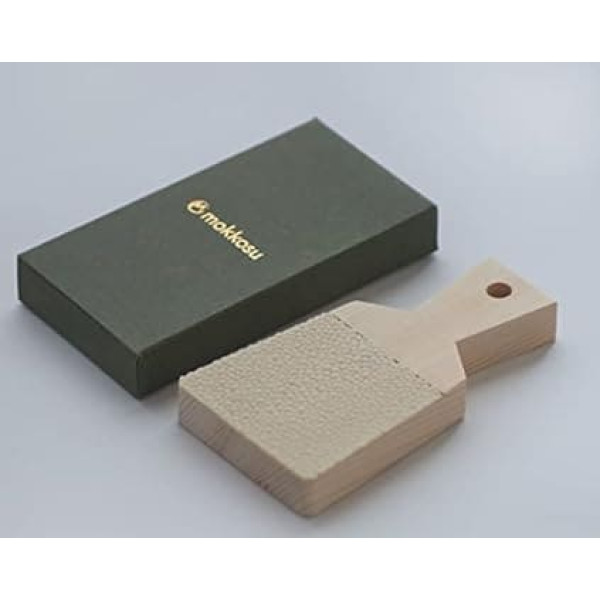
This product uses skin from fanrays, which has a similar texture to the traditional material used for Japanese classic graters. In Japan, it is widely known that rubbing from this skin are excellent tools for rubbing wasabi. Graters made from this material have long been considered the best tool for rubbing wasabi. Due to its many great uses. It is ideal for adding to your professional or home kitchen. The manufacturer specialises in the production of traditional cooking utensils and is highly rated in top sushi restaurants worldwide. This high quality grater brings out the best taste in raw wasabi. This tool creates finely textured grated wasabi while enhancing its aroma and spiciness. The grinding surface is made of convex shaped grains that prevent it from being clogged by grating food. Mokkosu Raw wasabi grater is available in small, medium and large sizes. › See more product details; Product description Wasabi rubbed with this tool is creamier and smoother than rubbing with metal graters. It maximizes the extraction of sulfinyl, a nutrient contained in wasabi. Raw wasabi differs significantly from the tube or powdered wasabi in the number of nutrients contained. The aroma and sharpness of wasabi are produced when its cell is broken or broken down, making this tool ideal for releasing its optimal taste. To achieve a fine and pasty grated wasabi, it is important to rub it clockwise in large circles to gently maximize the surface of the grater. History of the classic Japanese grater: At the end of the Edo period in Japan, the eating culture of sushi and soba became popular, and along with that, wasabi was eaten by many people. This type of grater was created as a tool for finely grated wasabi, inspired by the materials used by craftsmen and chefs to work the surface of wood by carpenters. Why use this product? When raw wasabi is rubbed with this grater, it finely breaks the wasabi cell, bringing out its rich aroma and flavor, extracting its most important nutrient that conventional metal graters cannot achieve. Care instructions: Wash gently with a scrubbing brush after use. Dry under a shaded area. Avoid using a dryer when drying. For frequent use, it is recommended to have another grater and use it alternately.; Product description Wasabi rubbed with this tool is creamier and smoother than rubbing with metal graters. It maximizes the extraction of sulfinyl, a nutrient contained in wasabi. Raw wasabi differs significantly from the tube or powdered wasabi in the number of nutrients contained. The aroma and sharpness of wasabi are produced when its cell is broken or broken down, making this tool ideal for releasing its optimal taste. To achieve a fine and pasty grated wasabi, it is important to rub it clockwise in large circles to gently maximize the surface of the grater. History of the classic Japanese grater: At the end of the Edo period in Japan, the eating culture of sushi and soba became popular, and along with that, wasabi was eaten by many people. This type of grater was created as a tool for finely grated wasabi, inspired by the materials used by craftsmen and chefs to work the surface of wood by carpenters. Why use this product? When raw wasabi is rubbed with this grater, it finely breaks the wasabi cell, bringing out its rich aroma and flavor, extracting its most important nutrient that conventional metal graters cannot achieve. Care instructions: Wash gently with a scrubbing brush after use. Dry under a shaded area. Avoid using a dryer when drying. For frequent use, it is recommended to have another grater and use it alternately.; Wasabi rubbed with this tool is creamier and smoother than rubbing with metal graters. It maximizes the extraction of sulfinyl, a nutrient contained in wasabi. Raw wasabi differs significantly from the tube or powdered wasabi in the number of nutrients contained. The aroma and sharpness of wasabi are produced when its cell is broken or broken down, making this tool ideal for releasing its optimal taste. To achieve a fine and pasty grated wasabi, it is important to rub it clockwise in large circles to gently maximize the surface of the grater. History of the classic Japanese grater: At the end of the Edo period in Japan, the eating culture of sushi and soba became popular, and along with that, wasabi was eaten by many people. This type of grater was created as a tool for finely grated wasabi, inspired by the materials used by craftsmen and chefs to work the surface of wood by carpenters. Why use this product? When raw wasabi is rubbed with this grater, it finely breaks the wasabi cell, bringing out its rich aroma and flavor, extracting its most important nutrient that conventional metal graters cannot achieve. Care instructions: Wash gently with a scrubbing brush after use. Dry under a shaded area. Avoid using a dryer when drying. For frequent use, it is recommended to have another grater and use it alternately.
|











![Pack of 10 Dimmable G9 Halogen Bulbs, 40 W 230 V 2800 K G9 Halogen Bulbs for Oven Lamp, Ceiling Lights, Candlesticks [Energy Class F]](https://anete.shop/image/cache/catalog/ext4oc/90/19083374_-9007480-238x238.jpg)